- To Programme Countries
- To Third Countries not associated with the Erasmus+ Programme
Programme Countries are those that co‑finance the Erasmus+ Programme and participate in it as full members. These include:
- the Member States of the European Union,
- third countries associated with the Programme: Iceland, Liechtenstein, Norway, Turkey, Serbia, North Macedonia.
Third countries not associated with the Erasmus+ Programme have been grouped by the European Commission into 14 regions. Mobilities to these countries are implemented only to the institutions defined as strategic for the development of TUL international cooperation and with which an inter‑institutional agreement has been signed.
- Mobility for teaching purposes;
- Mobility for training purposes;
- Mobility for participation in a Blended Intensive Programme (BIP).
1. Staff mobility for teaching purposes:
- These mobilities must take place at a university with which Lodz University of Technology has signed an inter-institutional agreement. The host university must hold a valid Erasmus Charter for Higher Education (ECHE), awarded by the European Commission, authorising participation in the programme.
- During the mobility, the participant is required to conduct a minimum of 8 hours of teaching. If the teaching activity is combined with a training activity during a single period abroad, the minimum number of hours of teaching per week (or for a shorter stay) is reduced to 4 hours.
- The participant is required to give a presentation on the educational offer of TUL to students and/or staff at the host institution and may be asked by TUL to discuss further possibilities for academic cooperation with the host institution.
2. Staff mobility for training purposes:
- These mobilities may take place either at a foreign university or at a non-academic institution (enterprise, organization, etc.) located in one of the Erasmus+ Programme Countries. In the case of mobility to a university, it must hold a valid Erasmus Charter for Higher Education (ECHE) awarded by the European Commission.
- They may take the form of group training sessions and workshops aimed at developing professional skills, such as, for example International Staff Training Weeks.
- They may also take the form of an Individual visit to exchange good practices, known as job shadowing visits.
- Training mobilities do not include participation in conferences.
3. Mobility for participation in a Blended intensive programmes (BIP):
A BIP is a short-term intensive training programme that uses innovative learning and teaching methods, combining physical mobility abroad with a compulsory virtual component enabling collaborative online work.
Within a BIP, the participant may carry out mobility for teaching or training purposes.
All staff mobilities under the Erasmus+ programme must be aligned with the internationalisation strategy of TUL, as set out in the Erasmus Charter for Higher Education (ECHE) and should serve as inspiration for introducing quality-enhancing in the participant's home unit and at the university.
- TUL staff employed under an employment contract or appointment agreement, who have a command of the foreign language used during the mobility at a level of at least B2.
- The following groups of TUL staff may participate in the mobilities for training purposes:
- non-academic staff,
- academic teachers holding functional/managerial positions,
- members of Study Programme Councils, serving as International Exchange Coordinators, as well as Representatives for international traineeships.
Employees of TUL who are selected for mobility receive EU funding as a contribution towards travel and subsistence costs incurred during their stay abroad, which includes:
Individual Support:
- These funds are intended to cover costs directly related to subsistence during the stay abroad.
- The employee's stay abroad may last a minimum of 2 days (excluding travel time) and a maximum of 2 months. In the case of mobility to a third country not associated with the Programme, the stay at the host university must last a minimum of 5 days and a maximum of 2 months. In both cases, the minimum number of days must be consecutive.
- The amount of individual support depends on the country group to which the host institution's country belongs.
- Individual support is granted for a maximum of 5 days of stay.
- The participant may also receive individual support from Erasmus+ funds for 2 travel days (1 day before and 1 day after the mobility period).
Travel Support:
- the amount of the travel grant depends on the means of transport and the distance between the place of departure and the destination and is determined by the European Commission in the Distance Calculator. To calculate the travel grant for a TUL employee, it is assumed that the place of departure is Łódź as this is the city where TUL is located.
"Green Travel" Funding:
- "Green Travel" refers to travel carried out entirely using environmentally friendly modes of transport, such as: train, bus or carpooling (understood as sharing a car by people travelling for individual purposes on the same route;
- “Green Travel” does not include travel by plane, ferry, boat or travelling alone by car .
- For travel classified as "Green Travel", the participant is entitled to a higher travel grant and the possibility to receive individual support for additional travel days (up to a total of 6 days).
Contact: staffmobility@info.p.lodz.pl
The qualification schedule for mobilities under the agreement number 2025-1-PL01-KA131-HED-000318205:
1st call
02.03.2026 - 15.03.2026 – submitting applications
16.03.2026 - 20.03.2026 – verification of submitted applications
23.03.2026 - 10.04.2026 – Qualification Committee meetings
by 24.04.2026 – announcement of the results
2nd call
04.05.2026 - 17.05.2026 – submitting applications
18.05.2026 - 22.05.2026 – verification of submitted applications
25.05.2026 - 04.06.2026 – Qualification Committee meetings
by 19.06.2026 – announcement of the results
3rd call
05.10.2026 - 25.10.2026 – submitting applications
26.10.2026 - 30.10.2026 – verification of submitted applications
02.11.2026 - 13.11.2026 – Qualification Committee meetings
by 27.11.2026 – announcement of the results
- The university reserves the right to make changes to the schedule.
- All staff mobilities must be completed by July 15, 2027.
- The staff member applying for a mobility is obliged to use current templates of documents.
- The same person can complete a maximum of 2 mobilities for training purposes.
- It is not permitted for more than one person from the same unit to undertake a mobility to the same host institution at the same time, except for mobilities carried out as part of a BIP in which TUL is a partner, and mobilities within ECIU events.
Qualification for mobilities is coordinated by the Outgoing Staff Mobility Division (SMK‑OUT).
QUALIFICATION DOCUMENTS:
- 1. Application form for the chosen type of mobility:
- Written confirmation from the selected host institution (e.g., an email) confirming the possibility of carrying out the planned mobility.
- required if you wish to apply for this type of support.
DOCUMENTS TO SUBMIT AFTER RECEIVING A POSITIVE FUNDING DECISION:
1. Agreement on the individual mobility programme (Erasmus+ Staff Mobility Agreement):
2. Application for an international trip:
The employee submits the application via the SAPort system and then forward the application in the EZD system along with all required approvals.
BEFORE THE TRIP:
- sign the financial agreement,
- download the travel insurance card from WIKAMP portal,
- check the travel recommendations issued by the Ministry of Foreign Affairs for individual countries,
- register in the Odyseusz service managed by the Ministry of Foreign Affairs.
If airplane tickets or accommodation bookings are necessary, make the purchase only after all the above documents have been approved by the authorized decision-makers.
Contact: staffmobility@info.p.lodz.pl
DURING THE STAY:
- For teaching mobility:
The staff member is required to deliver a presentation on the educational offer of Lodz University of Technology for students and/or staff at the host institution and may be asked by TUL to discuss further possibilities for academic cooperation with the host institution.
- For the training mobility:
The staff member may be asked by TUL to discuss potential future cooperation with the host institution and to give a presentation on the educational offer of TUL.
ON THE LAST DAY OF STAY:
- The staff member is required to obtain a Confirmation of Stay:
- The Confirmation of Stay must be issued on the host institution's official letterhead, according to the template provided below and must include information confirming the achievement of the objectives described in the Staff Mobility Agreement.
- The mobility period indicated in the Confirmation of Stay must match the mobility period specified in the financial agreement and in the Staff Mobility Agreement.
- The start date of the mobility period is the first day, and the end date is the last day on which the mobility participant (according to the approved Staff Mobility Agreement) must be present at the host institution.
- For teaching mobility, the Confirmation of Stay must additionally include the number of teaching hours delivered (in accordance with the information provided in the Staff Mobility Agreement for Teaching).
Sample Confirmation of Stay templates:
MOBILITY SETTLEMENT
Documents to be submitted to SMK-OUT no later than 2 weeks after the end of the mobility:
- Confirmation of Stay
This declaration is required if funding for “Green Travel” was requested beforehand.
Tickets must be provided for verification in the case of train or bus travel.
Reports to be completed within 30 days from the start date of the mobility:
- Survey in the Erasmus+ Beneficiary Module:
The mobility participant will receive an automatically generated email with a request to complete an individual report, including a link to the survey. -
The report must be completed and sent by email to: staffmobility@info.p.lodz.pl
Dissemination of mobility outcomes:
- Share examples of good practices related to organisational solutions or teaching methods (connected with the area of your mobility) with colleagues in your home unit.
- Write a short account of your mobility experience; we will publish it on our website.
- Participate in a university event promoting mobility and share your experience.
DOCUMENTS FOR DOWNLOAD:
Application forms for staff mobility:
Green Travel - additional funding for the travel that uses low-emissions means of transport
Staff Mobility Agreement:
Confirmation of Stay:
We encourage you to read the TUL staff mobility testimonials, Erasmus+ Programme, project KA131.
1) Kaunas University of Technology in Lithuania - dr inż. Gertruda Gwóźdź-Łukawska, dr Monika Potyrała, Centre of Mathematics and Physics,
Mobility for teaching combined with a training activity
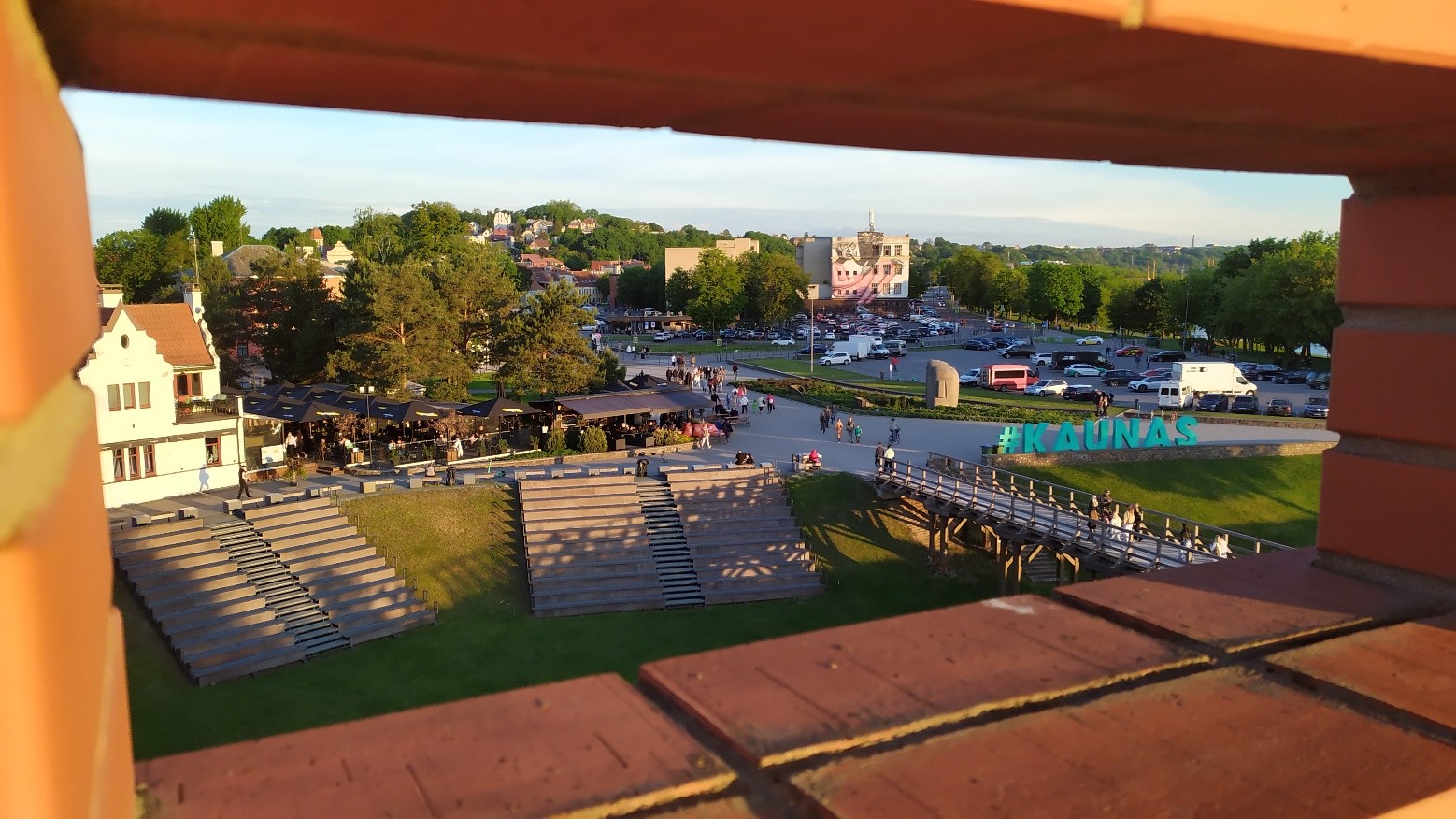
KTU – Kauno technologijos universitetas – is a technical university in Kaunas with over 100 years of history. This thriving institution boasts numerous national and international contacts and, like Lodz University of Technology, is a member of the ECIU.
The faculty buildings astonish with their functional interiors and modern design, offering spaces for individual and team work (Edulab, Library). However, the greatest value of the trip was working with students and exchanging experiences with KTU teachers. It was the diversity of our communication (Russian, English), the diversity of work experience in projects, teaching history and teaching methods used.
The opportunity to participate in the Technorama fair organised by the university cannot be overestimated. Students creating their semester projects have the chance to present their ideas to a wider audience, including people from outside the university. This is both the seed for new start-ups and additional inspiration for the development of the solutions presented.
Visiting KTU and teaching students, including conducting an exam in Programming for Data Processing and Visualisation, is a great opportunity not only to see the level of knowledge of Lithuanian students, but also to talk about Lithuania and Poland and encourage them to visit our country. But when you go to Lithuania, you don't feel like you're leaving your homeland, after all, you can say ‘Lithuania, my homeland...’ quoting Adam Mickiewicz.😊
Moreover, Lithuanian people are well-known for their hospitality, which is good for your physical and mental wellbeing. Friends from KTU are happy to share not only their achievements and thoughts – e.g. ‘How to interest Generation Z?’, but also the delicious taste of kvass and the beautiful views admired after class.
2) Universitat Politècnica de València, Spain - mgr Katarzyna Ochnio, mgr Gabriela Dróbkowska, Faculty of Biotechnology and Food Sciences,
Mobility for training
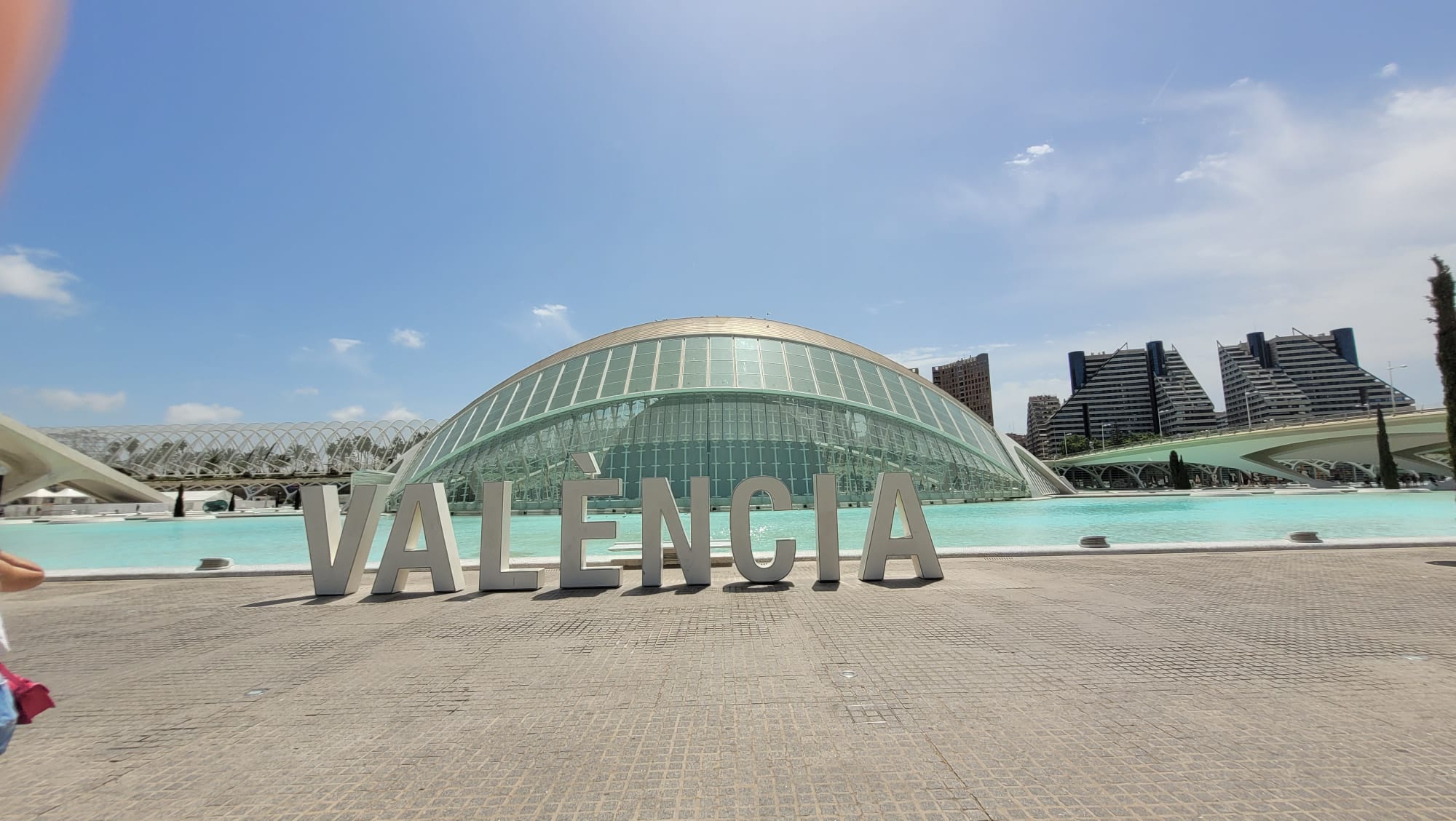
Foto: Katarzyna Ochnio
Thanks to the possibilities provided by the Erasmus+ programme for administrative staff, together with a colleague from the Faculty of Biotechnology and Food Sciences we had the opportunity to take part in a five-day language course entitled ‘STP Language and IT Trainings for University Staff’ at Universitat Politècnica de València.
The English language course was perfectly planned, organized and conducted.The hosts shared their knowledge, provided help and support. On the first day we got a lot of information about the Spanish higher education system. People from different countries including Czech Republic, Sweden, Germany and Lithuania participated in training sessions, which took place every day in the groups of 16.
We encourage the administrative staff to submit applications within Erasmus+ in order to increase professional qualifications, develop soft skills and improve language competencies. This kind of training is a perfect opportunity for growth and making numerous professional contacts.
3) University of Luxembourg - dr inż Leszek Czechowski, Faculty of Mechanical Engineering, Lodz University of Technology,
Mobility for training
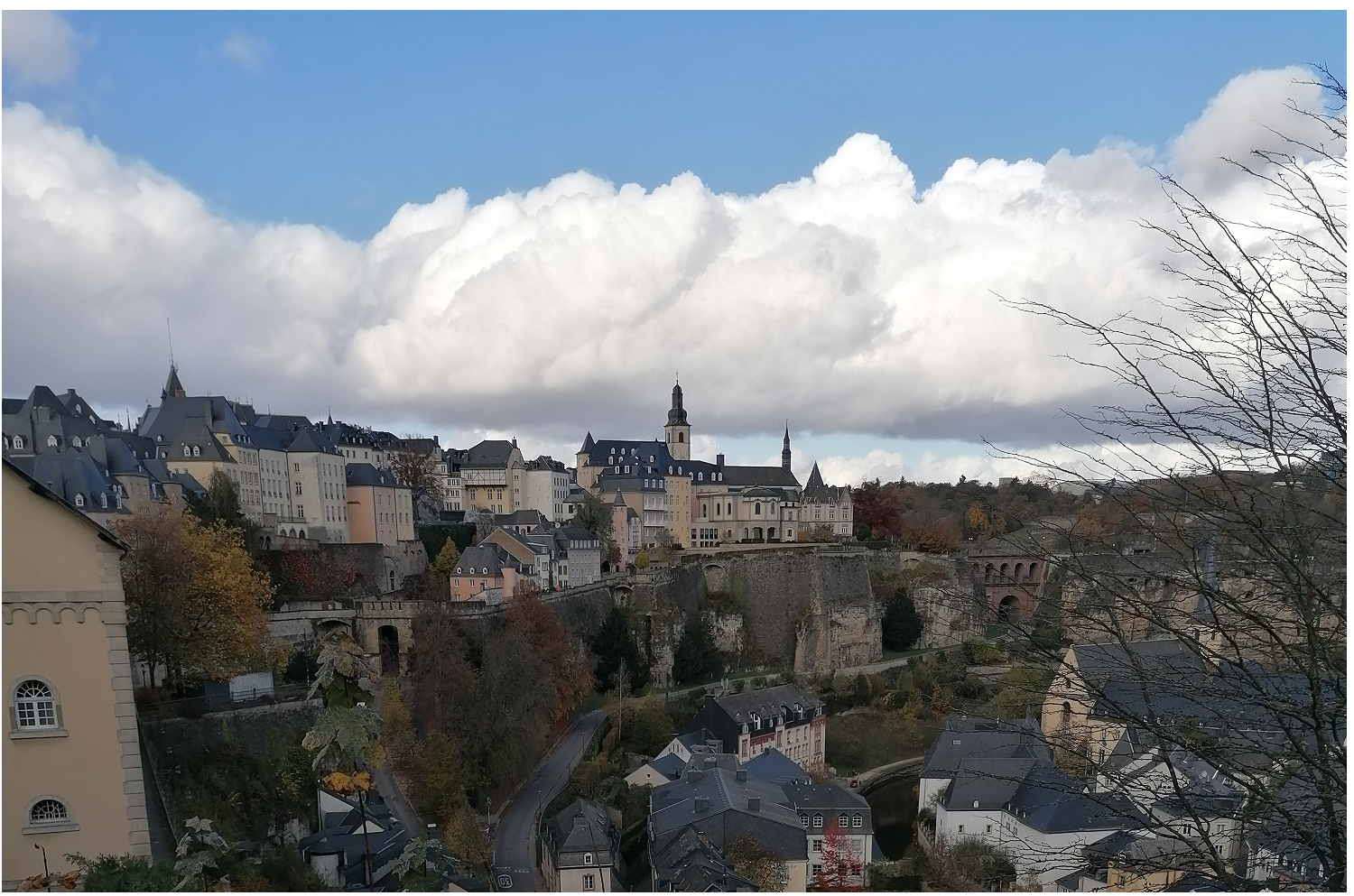
Foto: Leszek Czechowski
The training trip within Erasmus+ to University of Luxembourg, the Faculty of Science, Technology and Medicine (FSTM) allowed to broaden the knowledge in the field of printing techniques, make contacts and establish cooperation between research units. The University of Luxembourg was founded in 2003 and then employed 268 professors, 1061 academic staff, including 579 doctoral candidates, and 482 PhD employees. Studies are conducted in three languages: English, French and German. The University reunites many cultures from different parts of the world because students studying there and academic staff are from 129 and 94 countries respectively.
My first stage of training was based on acquiring the knowledge in the field of files preparation, control and support of 3D metal and plastic printers. The next steps involved teamwork activities, which led to creation of a printing filament from biodegradable PLA dedicated for printing (either pure or with addition of graphene nanopowder). The appropriate preparation of PLA foundation with graphene nanofillers with a specified weight fraction and the right choice of extruding parameters with a purpose of filament creation with addition of graphene in academic conditions was a challenge. Basic knowledge obtained during the training was the foundation for completing more advanced tasks, which I had to manage, such as defining print trajectory and initial parameters, the proper choice of parameters for print and printing samples with nanofillers.
The training and joint work conducted in an international team helped to gain experience and positive feelings, which in the future will certainly be an incentive for starting new directions of research and maintaining cooperation between the units. On the other hand, I could personally observe the ways and methodology of conducting lectures and laboratory classes.
To sum up, the training trip I made within Erasmus+ not only contributed to increasing my competencies but also provided many unforgettable moments.
4) Université de Caen-Normandie (UNICAEN), France - mgr Paulina Danieluk, International Cooperation Centre,
Mobility for training
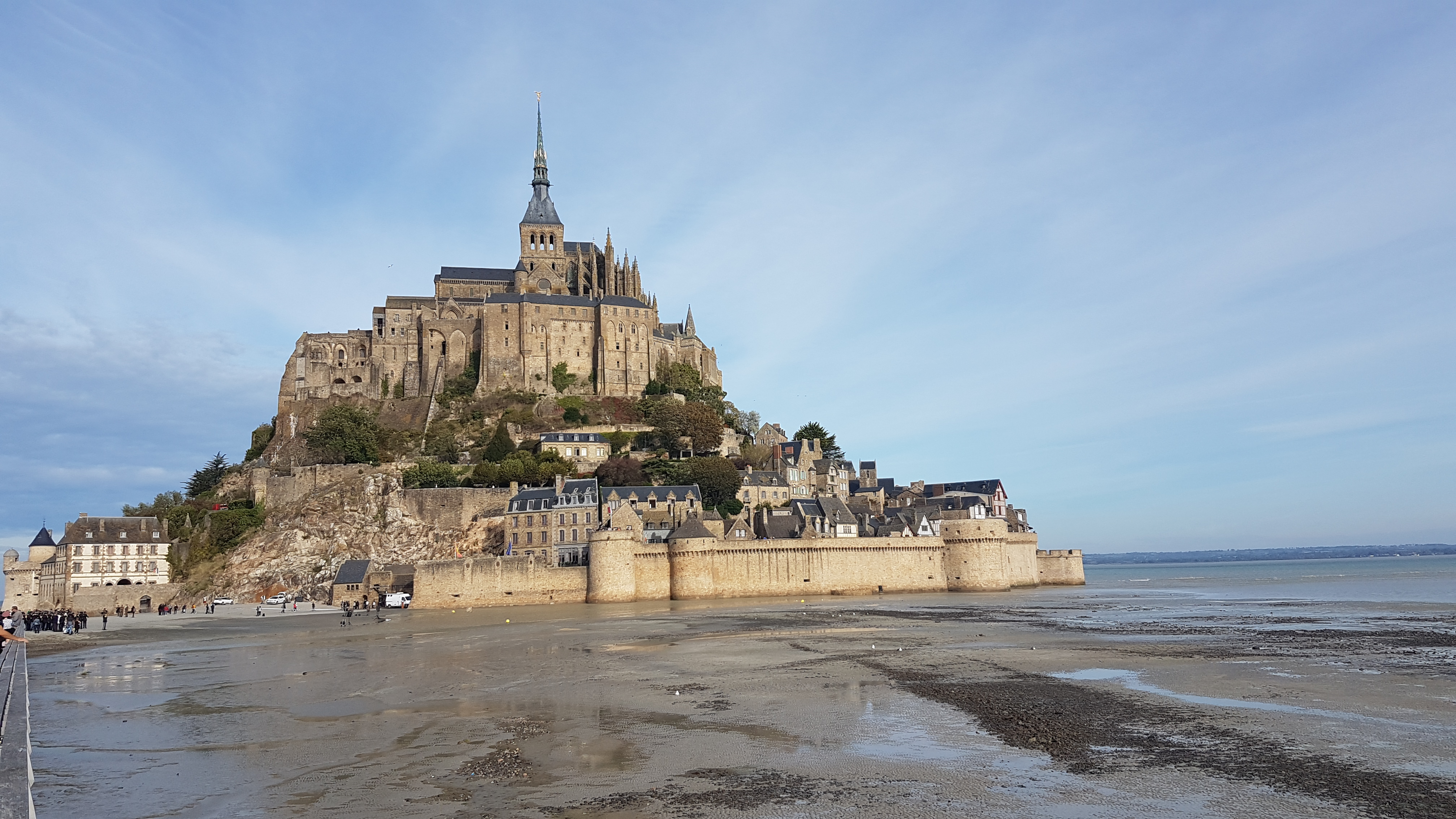
A trip to Normandy was a fulfillment of my dreams. Thanks to the Erasmus + program, I had the opportunity to represent Lodz University of Technology during the 1st International Staff Week in Caen entitled “Understanding International Attractivity”. The aim of the staff week was to integrate participants from different parts of the world and familiarize them with the topic of interculturality.
I decided to choose the staff week from among numerous offers available at the IMOTION website. The training was organized by Universite de Caen Normandié (UNICAEN) for administrative staff and it was related to internationalization. I work in the International Cooperation Center of Lodz University of Technology (TUL) and I deal with the visits of foreign guests and delegations. Having the opportunity of using funds within the Erasmus + program I wanted to expand my knowledge and competences. In addition, I have always wanted to visit Normandy and learn about its beauty, culture and historical heritage.
The University of Caen is the third, after Oxford and Cambridge, university founded by the English. It was founded in 1432 by King Henry VI Lancaster to educate the future English elite to manage the territories in France. The painful memories of the Second World War, as well as the literal rise of the university from the ashes, became the basis for the adoption of the Phoenix as a symbol of the University. The sculpture by Louis Leygue, representing a mythical bird, is located at the entrance to the University.
The staff week was focused on: Understanding international attractivity.
There were four different workshops during the week: Defining attractivity: academic, cultural, etc. Intercultural: an attractivity asset. International communication and visibility of institutions. Supporting international students. Additional area that I was interested in was the staff mobility. I had the opportunity to talk with representatives of various universities about the procedures concerning staff mobility at their institutions that could be implemented at our university.
Aside from the workshops, there were also sessions of presentations of each participant's institution. I began my presentation about TUL with a few words in French, to honour my hosts, and then I switched to English which was the language to be employed during the staff week. In my speech, I highlighted our university's successes related to the implementation of internationalization strategy, expressed by the presence in the prestigious Times Higher Education University Rankings and the accreditation of EAQUALS for the Language Center of the University of Lodz. The organizers were interested in the cooperation with Lodz University of Technology with regard to science and research and in particular in the field of molecular and nuclear physics. Not without reason, because in 2016 Lodz University of Technology signed a cooperation agreement with the European Organization for Nuclear Research CERN. They were also interested in cooperation in the field of summer schools concerning French language courses. This exchange of students takes place between UNICAEN and the University of Warsaw.
During my mobility adventure I met a lot of interesting people doing a job similar to mine at international cooperation offices. I learned procedures and systems to handle mobility. In social media, I established contacts with representatives of a number of universities: the University of Zurich, Polytechnic University of Catalonia, Uniwersytet w Würzburgu, Universidade NOVA de Lisboa , Universidad Autónoma de Madrid (UAM), Georg-August-Universität Göttingen.
Staff Week at Cean was exceptional not only for me as I heard similar opinions from other participants. The most important effect for me is the personal experience of the entire mobility process. As an employee of the Staff Mobility Division of International Cooperation Centre at TUL, I have significantly expanded my knowledge and can now help other employees.
The training was perfectly planned and organized. An additional attraction was an excursion to the world-famous Mont Saint-Michel - a rocky island in a bay connected to the mainland France with a 1,800 m long causeway.
I sincerely hope that my mobility experience will inspire other employees of TUL, which will in turn result in more applications submitted for staff trips abroad.